Tomorrow’s #traumaresearch chat: Preventing treatment dropout

Tomorrow we discuss ways to prevent treatment dropout at our live #traumaresearch Twitter chat (26 April; 9pm Melbourne, 13u Amsterdam; see your local time). Julia Diehle will join us as a special guest. She conducts research on Cognitive Behavioral Therapy and EMDR with children, and wrote last week’s guestpost. If you would like to join us tomorrow but don’t have Twitter experience, here’s the information on how to use Twitter and participate in a live chat.

In preparation for the chat, I wanted to share some more information on one of the papers Julia referred to. Glenn Saxe and colleagues conducted a trial with an innovative treatment approach that integrates and tailors different services (psychotherapy, psychopharmacology, home- and community based care, and advocacy) for children and their families. Continue reading

We don’t want to talk about it: Treatment dropout

This guest post is written by Julia Diehle, who is in the final year of her PhD project (supervised by dr. Lindauer and prof. Boer at the Academic Medical Center in Amsterdam). Her research project concerns a randomized controlled trial of Trauma-Focused Cognitive Behavior Therapy (TF-CBT) and Eye Movement Desensitization and Reprocessing (EMDR) in children with PTSD.

Treatment dropout will be the topic of next week’s #traumaresearch Twitter chat on Thursday 26 April (9pm Melbourne, 13u Amsterdam; see your local time & how to join). Julia will join us as a special guest, I hope to see many of you there! Now over to Julia: 

We do not like to talk about it but treatment dropouts and “no-shows” are a big problem in trauma therapy. Actually not in trauma therapy alone, but in outpatient settings in general. About 50% of adult patients drop out of outpatient therapy¹ and the number of children dropping out of treatment seems to be even higher. Miller and colleagues² found that more than 60% of children did not complete 8 sessions of therapy and that about 17% of the children did not even return after the intake session.

It is all about long-term vs. short-term gains

Trauma-therapy is no fun and treatment gains are achieved on the long term rather than on the short term. Continue reading

Paper in a Day: An invitation for early career researchers attending the ISTSS conference

Did you finish your PhD less than 5 years ago or are you about to submit it? And are you going to the ISTSS conference in LA? I’d like to invite you to a meeting just before the conference.

I have named it “Paper in a Day” and that’s exactly what it is (although..please read on :-)). The idea is to sit together with about 8 people and write a short report within one day. A super speedy process with a number of goals:

  • to get to know each other (hopefully we’ll have a nice mix of nationalities!)
  • to exchange ideas about traumatic stress and recovery
  • to come up with a collaborative short report
  • to have fun

In short: an intensive, nice, and productive day, with the potential to grow into a yearly event.

Program & preparation

The day will run from 8.30am until about 8.30pm, including plenary discussions, writing & analysis time in couples, and breaks :-). It will take place on Tuesday October 30th; the day before the pre-meeting institutes and the start of the conference. Continue reading

Empowering children and parents


How do we involve children and parents when we design new research? And how do we involve them in the development of interventions? In other words, how can we make sure that the studies we conduct and the care we provide are answering their needs?


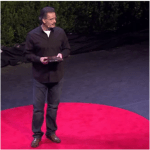
Giving children and parents a voice in our research and clinical work is the topic of next week’s #traumaresearch chat (Thursday 12 April in most time zones, find your local time here). It’s inspired by a moving TED talk by Lucien Engelen earlier this week. He is a change maker in health care and encourages professionals to listen more carefully to patients.

Continue reading

The 20 most inspiring papers on trauma recovery (or related mental health topics)

A few days ago I made an overview of the 20 most cited research papers on traumatic stress. And then came to the conclusion that what I’m really after is sharing a list of what you find the most inspiring ones (on trauma recovery or any related mental health topic)…

Which papers have made you really enthusiastic? Which articles have changed your thinking? Which publications do you re-read regularly?

We’ll have a #traumaresearch chat about these questions on Wed 28/Thurs 29 March (your local time). But an hour is short, not everyone is able to join, and it may be nice to start a little thread that informs the chat and remains available afterwards (it’s also possible that I’m just a little too curious to wait another week :-)). So please leave a comment with your favorite(s). Continue reading