5 key considerations for working with young traumatized children

This guest post is by Dr. Alexandra De Young. Alexandra is a clinical psychologist and research fellow. Her expertise lies in the impact of burns trauma on very young children and their parents.  She currently works at the Centre of National Research on Disability and Rehabilitation Medicine (CONROD), University of Queensland, where she conducts research on the assessment, diagnosis and treatment of accidental trauma in children. 

Five key considerations for working with young traumatized children:

1. Young children are a high risk group for exposure to traumatic events

Infants, toddlers, and preschoolers are particularly vulnerable to trauma exposure due to their stage of development.  Young children interact with their environment before they become aware of potential dangers and threat, are strongly reliant on adults to keep them safe and have limited skills to protect themselves.  Continue reading

The 20 most influential papers on posttraumatic stress

Which papers have shaped your thoughts on traumatic stress and recovery? Which articles do you often refer to? These questions will be the starting point for the next #traumaresearch chat on Twitter in exactly a week (March 28th in the US, 29th in Australia; see your local time).


Meanwhile, I have had a look at which publications have been most influential in terms of citations. For the methods (e.g., I have excluded articles focused on measures), see below. These are the most cited papers, with links to free full-text pdfs or abstracts:

  1. Kessler et al. (1995) Posttraumatic stress disorder in the national comorbidity survey. Archives of General Psychiatry. 3437 citations
  2. Breslau et al. (1991) Traumatic events and posttraumatic stress disorder in an urban population of young adults. Archives of General Psychiatry. 1181 citations
  3. Kendall-Tackett et al. (1993) Impact of sexual abuse on children: A review and synthesis of recent empirical studies. Psychological Bulletin. 981 citations
  4. Ehlers & Clark (2000) A cognitive model of posttraumatic stress disorder. Behaviour Research and Therapy. 978 citations               Continue reading

Epidemiology: A valuable way to study individual differences in risk and resiliency?

This guest post is by Odilia Laceulle. Odilia is finishing her PhD project at the Interdisciplinary Center for Psychiatric Epidemiology (UMC Groningen, with Prof. Ormel). She focuses on the influence of stressful life events on temperament and stress-reactivity during adolescence using data from the large cohort study TRAILS (TRacking Adolescents’ Individual Lifes Survey).

It is no surprise that many children and adolescents we see in clinical practice need help after being exposed to severe stress. However, not all children who are exposed to stress seek clinical help; some are able to cope with severe stress without therapy. But what defines the impact of severe stressors and who can cope with traumatic events and who cannot? And are all children at equal risk of getting exposed to these events, or can we distinguish factors that predict the likelihood of becoming a victim?  Continue reading

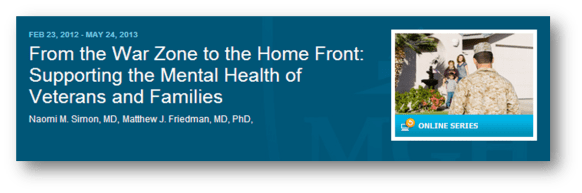
Free interactive online training: Supporting the mental health of veterans and families

This Thursday, a 14-session training series on diagnosis and treatment of veterans will start. It has an interesting line-up of presenters and explicitly takes families into account. The US based program is accessible for clinicians all over the world. Find your local time for the training here.

The description of From the War Zone to the Home Front:

“One in three U.S. service members returning from Iraq or Afghanistan will experience signs of combat stress, depression, post-traumatic stress disorder (PTSD) or symptoms of a traumatic brain injury. Only 50% receive their health care through the VA. Other vets and their families will seek care in community settings by primary care and community mental health clinicians. Continue reading

The efficacy of cognitive behavioral therapy for children with PTSD

This week, we discuss a recent meta-analysis by Kowalik et al, which will also be input to a live Twitter journal club / chat. If you would like to join or just want to read the comments, have a look at #traumaresearch on Thursday February 23rd 10pm GMT (= 5pm New York, 23h Amsterdam, Friday 9am Melbourne).

Cognitive Behavioral Therapy (CBT) is probably the most used, or at least most recommended, treatment for children with Posttraumatic Stress Disorder (PTSD). As I am quite fond of systematic reviews and meta-analyses, the new meta-analysis on the efficacy of trauma focused CBT by Kowalik and colleagues quickly grabbed my attention. Although (and because?) I have a few critical questions regarding the publication, I think it merits attention from researchers and clinicians. Continue reading