Former bomb disposal operator writes about posttraumatic stress

I just read the book “Extreme risk – A life fighting the bombmakers”. Chris Hunter describes his (training towards the) life as a British bomb disposal operator in it. He served in Bosnia, Northern Ireland, Iraq, and Afghanistan, amongst others. The book is a good read, and clearly shows the psychological effects of the war tragedies Hunter has witnessed. Although apparently he continued to function well enough to work, he did suffer from quite severe symptoms of posttraumatic stress for some time. One of his biggest losses concerned his wife and two daughters; he divorced, at least partly due to his symptoms and subsequent alienation. Three quotes I think were interesting: Continue reading

When a child’s death is not accidental

This week John Devaney gave a CAPRA seminar about best practices in child death reviews. In particular, he talked about deaths (suspected to be) caused by abuse or neglect. According to UNICEF figures, every year 3500 children under the age of fifteen die in industrialized nations as a result of abuse. Surprisingly, more children die from chronic neglect than from physical abuse. And the younger a child, the more he or she is at risk of non-accidental death, with infants having a three times higher risk than those aged 1-4 years, who run twice as much risk as children aged 5-14 years. Another important take home message: when an adult is known to be violent towards one member of the family (e.g., the partner), chances are high that the violence extends to other family members (the children) as well. This means that children are often not ‘only’ witnesses to, but also victims of, domestic violence. Continue reading

Many paths, one purpose

Working together to promote wellbeing after trauma: the Australian Centre for Posttraumatic Mental Health organizes a one-day expert forum to “bring together leading international and Australian experts, each with a unique perspective on tackling the mental health effects of trauma. As well as exploring trauma-related mental heath issues in a global context, expert speakers will share their views on best practice approaches to preventing, assessing and treating different types of trauma.”

Some of the names: Mark Creamer, Beverly Raphael, Jonathan Bisson, Richard Bryant, Derrick Silove, Alexander McFarlane, and David Forbes.

Check out the expert forum blog here.

The consequences of fatal intimate partner violence

Yesterday, young American football recruit Quan Bray lost his mother because her partner shot her in the head. Such horrific stories are not rare; in 2007 approximately 1,640 women and 700 men in the US lost their lives due to fatal intimate partner violence. Children suffer a triple loss in these cases. Not only one parent dies, the other is imprisoned (or committed suicide in some cases), and often a youngster cannot stay at home, additionally losing friends, school and a familiar environment. How do young people cope after such an experience? How can we best coordinate services for them in the direct aftermath as well as on the long term?

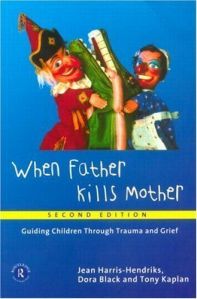
At the National Psychotrauma Center for Children and Youth in the Netherlands, we are currently writing up some of our experiences with these youngsters. One of the most confronting issues is that children are often ‘lost’ in judicial and placement struggles, which makes it difficult to start a ‘normal’ grieving process. Some good tips about understanding and supporting children after fatal intimate partner violence can be found in the book by Harris-Hendriks, Black, and Kaplan. They notably give clear examples of how one can explain to young children what has happened or where the perpetrator is, to give them as much support as possible from the immediate aftermath.

Book When Father Kills Mother

Go and collaborate

Child trauma researchers should collaborate more. That was one of the messages of the meta-analysis my colleagues and I recently published. Until now, researchers have conducted a number of interesting studies but these were relatively small and used a wide variety of methods and designs, which doesn’t permit robust conclusions. By combining efforts (see also the ‘data sharing’ page) much more could be known faster.

Our message is still relevant, but there are also some beautiful examples of collaboration. One was presented by Nancy Kassam-Adams at the European Conference on Traumatic Stress Studies. With three colleagues from the US and Australia she is building a large database from datasets of individual researchers: the Child PTSD Prediction Project. The data of  2500 children have been included so far (that’s already 25 times the usual N in a study…). It will enable researchers to answer questions about early risk and protective factors, and about trajectories of posttraumatic stress symptoms in children. Go and collaborate!