Top 5 online resources for children and parents after trauma, and more…

Set off by the tragic events in Norway in July 2011, I started a somewhat frantic search for websites on posttraumatic recovery designed for youths and parents.


The criteria: the information and tips should be 1) evidence-informed, 2) written for an audience of children/adolescents or parents, 3) easily accessible, 4) freely available, and preferably 5) interactive.

Those are tough criteria. There are not many resources that tick all the boxes, but they do exist.

My top 5 (biased by the languages I speak and some chauvinism…) is: Continue reading

Tips to help survivors of youth camp shooting in Norway

My thoughts go out to those in Norway who have been affected by the tragic events in the past days, both in Oslo and Utøya. I can’t imagine the scale of this tragedy, and wish survivors all the strength and time needed to come to terms with the experience and the loss of loved ones. When you are looking for information about helping the youngsters and their families involved, below are some links to resources.

Continue reading

The consequences of fatal intimate partner violence

Yesterday, young American football recruit Quan Bray lost his mother because her partner shot her in the head. Such horrific stories are not rare; in 2007 approximately 1,640 women and 700 men in the US lost their lives due to fatal intimate partner violence. Children suffer a triple loss in these cases. Not only one parent dies, the other is imprisoned (or committed suicide in some cases), and often a youngster cannot stay at home, additionally losing friends, school and a familiar environment. How do young people cope after such an experience? How can we best coordinate services for them in the direct aftermath as well as on the long term?

At the National Psychotrauma Center for Children and Youth in the Netherlands, we are currently writing up some of our experiences with these youngsters. One of the most confronting issues is that children are often ‘lost’ in judicial and placement struggles, which makes it difficult to start a ‘normal’ grieving process. Some good tips about understanding and supporting children after fatal intimate partner violence can be found in the book by Harris-Hendriks, Black, and Kaplan. They notably give clear examples of how one can explain to young children what has happened or where the perpetrator is, to give them as much support as possible from the immediate aftermath.
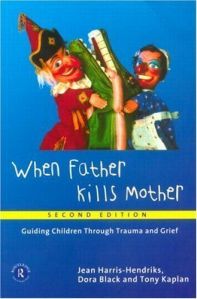
Book When Father Kills Mother

Supporting children in the classroom after a traumatic event

Dutch Toolkit Child en Trauma

Teachers in primary schools feel rather uncertain about their role and skills when it comes to trauma and traumatic stress (see the Dutch news). They don’t get much training about child mental health in pre-teacher education, even though psychological well-being is a requirement for children’s learning. Now I do certainly not want to argue that teachers should learn to be therapists, but I think that they can play an important role in signaling chronic traumatic stress symptoms and referring children and parents to specialists.

To build teachers’ confidence, we made a Toolkit Child and Trauma. It consists of a website and a booklet about traumatic exposure, posttraumatic stress, classroom skills, specialized organizations, and self care. We made the toolkit in collaboration with teachers, in order to really tune in to their needs and interests. The main idea of the toolkit is that children are resilient: most of them will overcome difficulties with the support of their social environment.

The tips we elaborated on for assisting a child after a traumatic event: Continue reading

“I don’t know” may mean many things

What do you think a child means when he says “I don’t know”? Especially when you’re talking about a traumatic event, such as the sudden death of his father? During the expert forum on Children and trauma (June 9 in Utrecht), communication specialists Joyce Lamerichs and Marca Schasfoort  zoomed in on interactions between children and professionals talking about traumatic experiences. The main conclusion of their analysis: don’t think too quickly that a child doesn’t know or doesn’t want to answer. Children may have many reasons to say that they don’t know, and sometimes still come up with answers afterwards.