Youth consultation when planning for emergencies

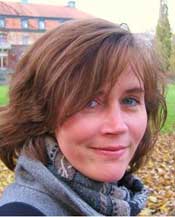
Australia has experienced a number of large disasters in the past few years. Examples are the extensive floods in Queensland in 2011 and the deadly bushfires in 2009. Susan Davie works in government emergency management and is a big advocate for engaging youth in the planning process. She shares her impressions of a pilot youth consultation.

One of the gaps in emergency management (EM) planning in Australia is the lack of consultation with young people. In essence young people do not have a voice, even though there is no doubt that children and young people are affected by disasters and emergency events. They do have specific needs, from child toilets in evacuation facilities to youth-centered psychosocial interventions.

Health and Human Services Emergency Management in Victoria is currently coordinating a project on planning for children and young people in emergency management.[i] As part of this project, we just undertook a pilot youth consultation in the Macedon Ranges Shire, a beautiful area at about an hour’s drive from Melbourne. The local committee was keen to hear the thoughts and ideas of young people and integrate them in their emergency management plans. Continue reading

The consequences of fatal domestic violence for children

A man kills his wife in a moment of rage and flees the house while the children are still with their mother. A mother stabs her husband to death after years of domestic violence. These stories are barely imaginable but too often they happen in reality.

In the Netherlands, estimations are that 40 people are killed by their (ex) partners every year. Many of them leave children behind. In the United States, about 2000 to 3000 children are thought to be affected yearly

In order to get a better understanding of children’s situation after fatal violence, our team at the Dutch National Psychotrauma Center for Children and Youth studied the cases of 38 children (from 25 families) of whom one biological parent killed the other biological parent. We set out to answer four exploratory questions:

1) What did the children experience? Continue reading

Child in the shadowlands

The topic of this blogpost made the headlines in a shocking way this week when US Republican Todd Akin stated that women rarely get pregnant from rape because “the female body has ways to try to shut that whole thing down.”

Akin’s medieval assertions coincided with the publication of an essay in the Lancet that went in the very opposite direction and requested more attention for children born of rape, in particular in war circumstances.

Lead author Elisa van Ee, clinical psychologist and PhD candidate at Centre ’45 introduces the essay below.

The World Health Organization described children born of rape as at risk of being neglected, stigmatized, ostracized, or abandoned. Cases of infanticide (the killing of an infant) have also been reported. Despite such general concerns, little is known about the fate of these children. Continue reading

Trauma Recovery Fellowships

Two Melbourne-based fellowships are available for international PhD students and Post docs from January to March 2013!

Please spread the word…


The Trauma Recovery Lab

The new Trauma Recovery Lab within Monash Injury Research Institute aims to understand and facilitate children’s recovery from traumatic stress. Continue reading

8 Guiding Principles for Peer Support Programs in High-Risk Organizations

This guest post is by Dr. Tracey Varker. Tracey is a research fellow at the Australian Centre for Posttraumatic Mental Health and specializes in mental health of emergency services personnel, among others.

Peer support programs have emerged as standard practice for supporting staff in many high-risk organizations – that is organizations which routinely expose their personnel to potentially traumatic events such as emergency services, rail services, and the military¹. Despite their increasing popularity and implementation across a range of high-risk organizations, the published literature mostly comprises descriptive studies, often with small samples and cross-sectional designs, or longitudinal designs without comparison groups². Continue reading