We revere evidence-based practice. But what if the evidence base itself is not inclusive?

Photo by Mario Gogh on Unsplash

Are you engaged in research? Take one of the projects you’re involved in…

  • Is the team lead a white person or a person of color? How about the rest of the team, who are you inviting on it?
  • Who are you studying; do they have a real say in the research agenda?
  • Who do you cite; do you actively search for and include scholars from underrepresented backgrounds?
  • Similarly, who do you invite to give presentations?

I’m talking to myself as much as I’m talking to you; there are so many areas where I should have been more inclusive (more on that later). This Wednesday/Thursday we hold a session (2 time zone options) to brainstorm small steps that we can already take to improve what we do.

Today, I wanted to talk about what motivated our team to organize this session: what we learned from our project on child trauma treatment guidelines.

Clinical practice guidelines are documents that inform clinical practice in several ways. They tell us what current evidence-based practice is, what the best trauma treatments are. They inform practitioners, prospective clients, professional associations, policy makers, program managers, regulatory agencies, and insurers, to name a few.

So they are important and influential. They can support equity and inclusion by means of their recommendations.

While doing an initial exercise of comparing recommendations across various guidelines, we got interested in children’s representation:

  • whether children had had a voice in the guideline process (as a ‘consumer’) and
  • whether their diversity of cultural backgrounds had been recognized and represented

The full – though short 😊 – commentary is available here (open access). Here is a quick overview of what we found: 

Voice:

As far as we could tell from the 14 sets of guidance documents we considered, children or young people had not been actively involved in the development process of the guidelines:

They will have had a voice via the input from child-focused practitioners and researchers but we didn’t find reports of facilitated discussions or consultation with children and/or young people allowing their voice to be heard directly regarding proposed guideline questions, procedures or recommendations.

Cultural background:

Continue reading

Making our daily research practice more inclusive

Making our daily research lives more inclusive

For the researchers among us, the quality of our findings and resulting policy/practice change depends on how well we work together with the populations we study.

Underrepresented groups are exactly that: underrepresented. Not only in research samples but also in those who lead the research, or are invited on the team.

Next week, we’re organizing two 1-hour conversations on Zoom (offered twice to accommodate time zones) on generating feasible ideas to make our daily research practice more inclusive.

Our starting point is this recent commentary on equity and inclusion in trauma treatment guidelines (several commentary authors will join). We anticipate the conversation to be relevant beyond the trauma research field, and colleagues across disciplines are welcome.

We will discuss how we can be more inclusive in, for example: a) how we construct our research teams, b) what we study, c) how & where we communicate findings, and d) how we give credit (and who we cite!)

We will gravitate towards tangible actions that are feasible for PhD students and early-career researchers.

Our two sessions are (check the links for time zone conversion):

And you can register here to join us – I hope to see you there!

Artist Luka Lesson and colleagues on (lack of) inclusion:

https://youtu.be/D-HED2UXwbw

Homicide of children with a disability

Children with a disability are at greater risk of death at the hands of someone else – through homicide or the effects of maltreatment – than children without a disability.

John Frederick* has led a systematic review looking at the theories that explain why this is the case. Here is John:  

There is growing recognition of the increased vulnerability to abuse of children who are disabled. Specifically, within the literature on homicides and maltreatment-related deaths of children, disabled children have been identified as likely to experience a greater risk.

We systematically reviewed the empirical literature to better understand the risk factors involved and assess support for the theories that have been proposed to explain this greater risk.

To start with the latter, what are the theories to explain disabled children’s higher risk? They respectively focus on:

  1. The stress of caregiving;
  2. Altruistic intent;
  3. Lack of bonding with the child;
  4. The challenging behaviours of the child;
  5. Cultural beliefs about disabled children; and
  6. Evolutionary imperatives.
Continue reading

From Trauma to Recovery – A blog post on the 35th Annual Meeting of the International Society of Traumatic Stress Studies (ISTSS) in Boston

Curious to know what the recent ISTSS conference was all about? Many thanks to Yoki Mertens for this reflection on the meeting! 

It is early morning in a freezing-cold Boston and Judith Herman presents as the first keynote speaker of the 35th Annual Meeting of the International Society of Traumatic Stress Studies (ISTSS). One might assume the organizers scheduled it this way to ensure everybody arrives on time and it worked: The room is filled with over 1,700 attendees, more than ever before. It’s been 27 years since Judith Herman published her renowned book “Trauma and Recovery” and introduced the concept of complex PTSD. Back then, the New York Times called it “one of the most important psychiatric works to be published since Freud”.

The prevailing question of this annual meeting is: How far has trauma research, trauma therapy, and policies come in helping individuals with (complex) PTSD recover in the past decades? And which paths to take to move forward? After three days of attending symposia, panels, and poster sessions, it can be convincingly stated that steep progress has been made. Meanwhile, some challenges are left to be solved for the current generation of trauma researchers and clinicians. Continue reading

Highlights of the European Conference on Traumatic Stress 2019

Didn’t get the chance (like me 😦 ) to attend the conference of the European Society of Traumatic Stress Studies this year?  

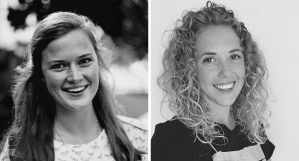
Maya Meentken and Marie-Louise Kullberg help us out!

We are Maya and Marie-Louise, two Dutch PhD Candidates, sharing some of our ESTSS conference 2019 – both scientific and non-scientific – highlights with you. It all started on Thursday with the inspiring pre-conference paper-in-a-day workshop: A collaboration of 7 young researchers from Germany, Israel and the Netherlands with an interest in (child) trauma, but with a widely varying focus: From burn injury-related trauma to childhood maltreatment, and an MRI study on dissociation to EMDR for medical-related PTSD.

During this year’s paper-in-a-day, hosted by Anne Krause and Lonneke Lenferink, we focused on child trauma utilizing the data from the Prospective studies of Acute Child Trauma and Recovery (PACT/R) archive. The archive includes data of 32 child trauma studies from e.g. US, UK, Australia, Switzerland, representing data from 5500+ children exposed to a single incident trauma, such as injury, disaster, interpersonal violence etc. and is openly available (!). Throughout the whole day Nancy Kassam-Adams from the PACT/R team joint us to answer all our questions and share her ideas on the rich dataset.

Just a sneak preview of our findings; with a latent class analysis we distinguished three groups based on presence of acute stress disorder symptoms and predicted group membership by several trauma and background characteristics. Discussing the methods and our findings plenary and in subgroups answered many of our questions and generated new ideas. The final paper can be expected soon! To all (early-stage career) researchers: We would highly recommend to participate in a next edition to encourage cross-border collaborations and sharing knowledge. (Eva: yay 🙂 )

On Friday the conference was officially opened with a wonderful performance of the four dancers of Amenti Collective. The next three days, many fantastic keynotes, masterclasses, symposiums, posters and talks followed. Just to mention some of our favorites: Talya Greene’s masterclass on network modeling of PTSD symptoms, the keynote of Mark Jordans on global trauma care and the sharp symposium on early screening for PTSD following emergency department admission by Mirjam van ZuidenJuanita HaagsmaKatharina Schultebraucks and Miranda Olff.

During the ESTSS Young Minds lunch on Saturday we did some speed-dating with other early-stage career researchers from the psychotrauma field. During the ‘speed dates’ we discussed various topics such as ‘life as a PhD student’, supervision, development etc.,  a nice way to meet some peers!

A last impressive program part we would like to mention is the screening of the documentary Reconstructing Utøya by Steffen Svedsen on Sunday. Next to all high-quality clinical and research presentations, the documentary added the compelling perspective of 4 victims from the horrific 2011-event. It gave interesting insights into the different personal perceptions of the event and the long course of recovery afterwards. It made us realize how vulnerable people are, but also how resilient they  can be, which underlines the relevance of all the research we absorbed the past three days.

Thank you to all the presenters and organizers, we’d hope to see you during a next ISTSS/ESTSS conference!

Thanks Maya and Marie-Louise, and everyone who made the ESTSS conference possible this year! The next ESTSS conference will be in Belfast (16-19 June 2021). The theme: Trauma and resilience through the ages: A life course perspective

Maya and Marie-Louise’s blogpost also appeared on the website of the NtVP