
Yesterday, young American football recruit Quan Bray lost his mother because her partner shot her in the head. Such horrific stories are not rare; in 2007 approximately 1,640 women and 700 men in the US lost their lives due to fatal intimate partner violence. Children suffer a triple loss in these cases. Not only one parent dies, the other is imprisoned (or committed suicide in some cases), and often a youngster cannot stay at home, additionally losing friends, school and a familiar environment. How do young people cope after such an experience? How can we best coordinate services for them in the direct aftermath as well as on the long term?
At the National Psychotrauma Center for Children and Youth in the Netherlands, we are currently writing up some of our experiences with these youngsters. One of the most confronting issues is that children are often ‘lost’ in judicial and placement struggles, which makes it difficult to start a ‘normal’ grieving process. Some good tips about understanding and supporting children after fatal intimate partner violence can be found in the book by Harris-Hendriks, Black, and Kaplan. They notably give clear examples of how one can explain to young children what has happened or where the perpetrator is, to give them as much support as possible from the immediate aftermath.
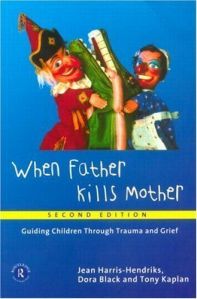
Book When Father Kills Mother


 Trauma Recovery Lab